Mary Lewis—Thomas Middleton
Killers of the Flower MoonMary DeNoya-Bellieu-Lewis’s connection with Thomas Middleton began in the circumstances of a trip and ended in a scheme to murder her for her headright. Her case exposed a pattern of exploitation that reached beyond the better-known killings associated with William K. Hale: Middleton used the trust of a woman he accompanied, then tried to turn her disappearance into access to her money.
From Companionship to a Murder Plot
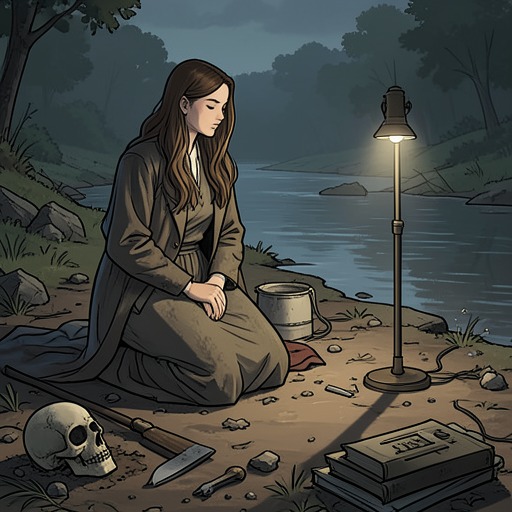
In 1918, Mary DeNoya-Bellieu-Lewis was in her mid-fifties, a prosperous allotted member of the Osage Nation, twice divorced, and raising a ten-year-old adopted child. That summer she traveled with the child to Liberty, Texas, accompanied by Middleton, described as a friend, and another white man who was Middleton’s companion. Using Lewis’s money, the men bought a houseboat, and the party stayed on the Trinity River. On August 18, Lewis vanished.
After authorities failed to investigate, Lewis’s family hired a private detective. The detective found that Middleton had pretended to be Lewis’s adopted son after her disappearance and cashed several of her checks. This impersonation made the relationship’s criminal purpose plain: Middleton was not merely a companion who happened to be near her when she disappeared, but a participant in an effort to take financial advantage of her absence.
Police detained Middleton and his companion in January 1919, and the private detective questioned them. He pressed Middleton to help locate Lewis, saying that he would far rather find her alive than dead. Middleton maintained that he did not know where she had gone and said he was not afraid; neither man disclosed what had happened. Their denials stood against testimony from two witnesses, who had seen a car traveling toward a snake-infested swamp a few miles from the houseboat on the day Lewis disappeared.
Search, Confession, and Sentence
On January 18, 1919, investigators began searching the swamp near the Trinity River, rolling up their pant legs as they combed through dense vegetation. A reporter described one lawman struggling to free his feet from the bayou mud and bringing up a thick mass of a woman’s hair. Investigators then dredged up leg bones, a human trunk, and a skull that appeared to have been struck with a heavy metal object. The discovery ended the search for Mary DeNoya-Bellieu-Lewis and transformed the men’s denials into a murder investigation.
Middleton’s companion confessed to beating Lewis over the head with a hammer. The plot, he said, had been conceived by Middleton: after the killing, a female associate was to impersonate Lewis so the men could collect her headright payments. The attempted impersonation was part of the plan, not an incidental fraud after her disappearance; Middleton had already posed as her adopted son to cash her checks.
In 1919, Middleton was convicted of murder and sentenced to die. Lewis’s family initially felt relief that the ordeal appeared to be over, but that satisfaction gave way to disbelief and anger when his sentence was commuted to life. After he had served only six and a half years, the governor of Texas pardoned him. Lewis’s family believed Middleton’s girlfriend had bribed authorities, though the account presents that as their belief rather than an established finding. The pardon left a stark imbalance: Lewis had been killed for the prospect of her headright, while the man identified as the plot’s architect returned to freedom after a fraction of his life sentence.
Historical Scope and Significance
Lewis’s murder widened the chronology of the Osage killings. Accounts commonly dated the Reign of Terror from the spring of 1921, when William K. Hale had Anna Brown murdered, to Hale’s arrest in January 1926; Lewis’s 1918 death showed that killings for headrights had begun at least three years earlier. The chronology also extended beyond Hale’s arrest: the poisoning of Kathryn Red Corn’s grandfather in 1931 pointed to violence continuing afterward. Together, these cases challenge the idea that the murders were the work of a single conspiracy directed by Hale. He may have led the bloodiest and longest killing spree, but many other killings were omitted from official estimates and, unlike the Lewis case, were never investigated or even classified as homicides.
Recovery and the Limits of the Record
The account of Mary DeNoya-Bellieu-Lewis and Thomas Middleton survived not only in official records but through family research. In January 1998, Anna Marie Jefferson, Lewis’s great-great-grandniece, assembled a spiral-bound manuscript from relatives’ recollections, newspaper clippings, and other records. Jefferson had first heard the story from her great-grandmother around 1975, then spent two decades gathering its scattered details. A copy was left in the public library in Pawhuska, where it could be found among books on Osage history even as the available archives and documents grew fewer. That route of preservation matters: a killing obscured by failed investigation and a disputed, early release remained legible through a descendant’s sustained effort to keep the family’s account from disappearing.